
Security Camera Types Explained: Multi-Sensor, 180°, Fisheye, PTZ, and More
See how commercial camera styles cover different spaces, where each has limits, and how to choose the right mix of overview and identification views for your business.
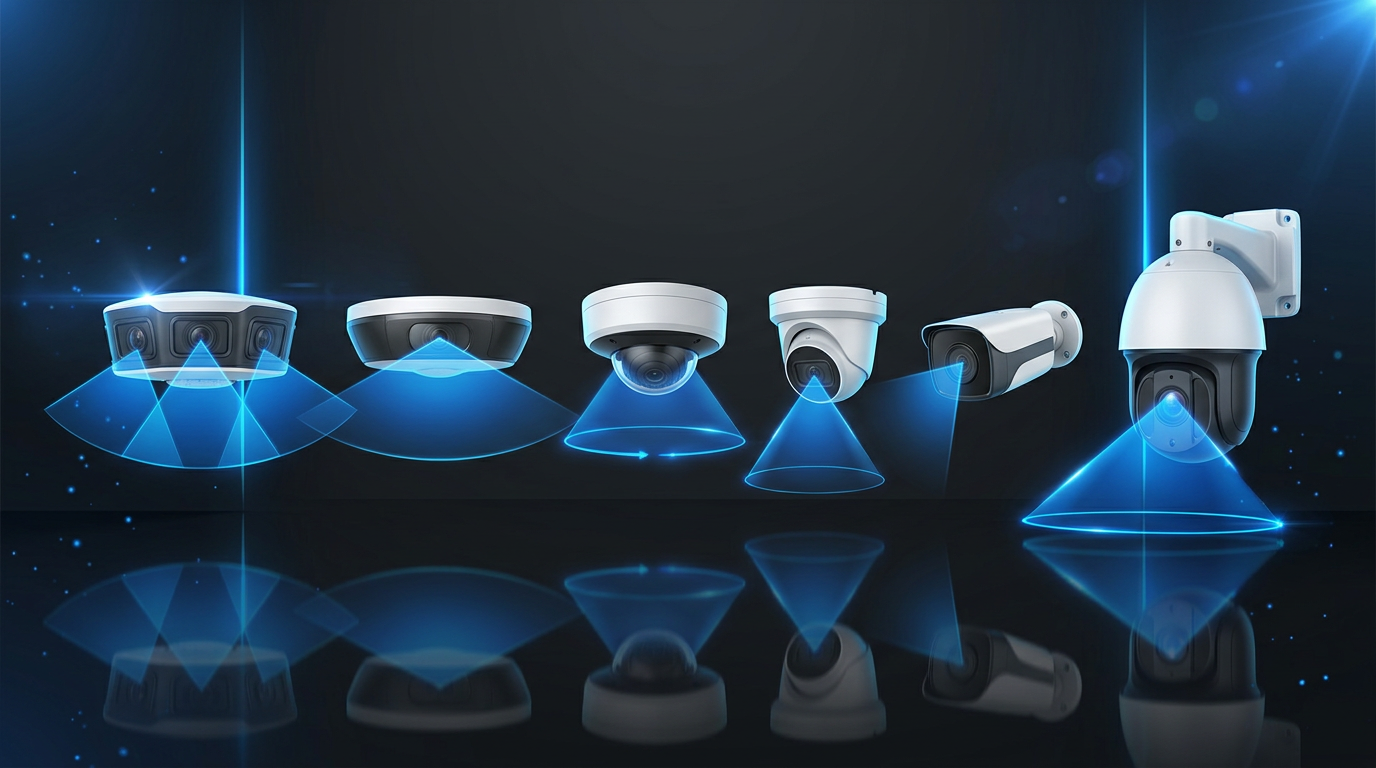
No single camera fits every view. Start with what you need to see: the movement of people across a room, or enough detail to identify someone at an entrance? Mounting location, lighting, and distance all affect the answer. Pixel density matters, too. A wide view spreads the available pixels across more space, making it useful for an overview; a narrower view can concentrate detail where faces or license plates need to be readable.
Fixed cameras: bullet, turret, and dome
Bullet cameras have a conspicuous shape that can serve as a visible deterrent. Models with suitable lenses are often used for longer views along outdoor perimeters and parking areas. Their actual reach depends on the lens, resolution, lighting, and the detail you need at the far end of the view.
Turret cameras use an aimable, ball-in-socket-style head. They are a practical all-around choice because installers can point them precisely, and their exposed lens avoids the infrared reflections that a dome cover can introduce. Check each model’s mounting and weather ratings for the location.
Dome cameras sit behind a cover, making their direction less obvious at a glance. They suit ceilings and interiors, and vandal-resistant, IK-rated options are available for exposed locations. Keep the cover clean and account for possible glare or infrared reflection when planning a night view. Across these fixed-camera styles, varifocal or motorized-zoom lenses can let the field of view be tuned during installation; availability varies by model.
Multi-sensor cameras: several directions from one mount
A multi-sensor camera typically places two to four independently aimable sensors in one housing. From a building corner, hallway intersection, or parking-lot mounting point, those sensors can look in different directions. Many installations use one mount and one network cable, though power and connection requirements vary by model.
Because each sensor captures its own image at its own resolution, a multi-sensor setup can retain more useful detail in separate directions than stretching one sensor across a similarly broad view. Recording and software licensing are separate questions: some systems count or license each sensor as a channel. Confirm compatibility, channel counts, and costs with the chosen recorder or platform.
180° panoramic cameras: one continuous wide scene
A 180° panoramic camera typically combines images from multiple sensors into one stitched, side-to-side view. Mounted on a wall, it can show an entire room or the width of a lot without gaps between separate camera views. Storefronts, the ends of warehouse aisles, and parking areas are common places to consider one.
A continuous image is convenient for following movement, but stitching can distort objects close to a seam, especially when they are very near the camera. Check sample views at the intended mounting height and distance before relying on the image for identification.
Fisheye and 360° cameras: a whole-room overview
A ceiling-mounted fisheye camera uses one ultra-wide lens to see around the room. Compatible dewarping software can turn its circular image into panoramic or virtual PTZ views without mechanically moving the camera. This makes it useful for situational awareness on retail floors, in lobbies, and across open offices.
That coverage comes with a trade-off: detail generally falls toward the edges, and faces at a distance may not be identifiable. Ceiling height changes how much useful detail reaches the floor. Use a dedicated, narrower view wherever identification is important.
PTZ cameras: zoom where attention is needed
A pan-tilt-zoom camera can turn and use optical zoom to inspect a distant part of a large lot or campus. Depending on the model and configuration, an operator can direct it, or it can run preset tours or auto-tracking. Optical zoom helps with distant detail, but a PTZ only records what it is pointed at at that moment. Pair it with fixed overview cameras so an incident elsewhere is not missed while it looks away.
Specialty cameras for specific jobs
- License plate recognition (LPR) cameras are configured around vehicle speed, shutter settings, lighting, and a suitable viewing angle. A general parking-lot overview is not a substitute for a properly planned plate view.
- Thermal cameras detect heat differences and can support perimeter detection in darkness. They are not a replacement for a visible-light camera when identifying faces or reading plates.
- Covert or pinhole cameras can fit discreet monitoring needs where their use is appropriate. Review placement, notice, and applicable privacy requirements before installation.
- Dual-lens or multi-directional models can combine complementary views, such as a broad overview and a downward view, within one housing. Available combinations vary by model.
| Type | Typical coverage | Best for | Watch out for |
|---|---|---|---|
| Bullet | A directed view; lens choice can support longer distances | Visible outdoor perimeter or parking-area coverage | Confirm useful detail and lighting at the target distance. |
| Turret | An aimable, fixed view | Versatile entrances, corridors, and exterior mounting points | Check the model’s weather rating and chosen lens. |
| Dome | A fixed view behind a cover | Discreet ceiling views and locations needing vandal-resistant options | A dirty cover or infrared reflection can degrade night images. |
| Multi-sensor | Several independently aimed directions | Corners, hallway intersections, and multi-directional lots | Verify power needs and whether licensing counts each sensor. |
| 180° panoramic | One stitched, side-to-side view | Storefronts, aisle ends, and broad lot overviews | Close objects may distort near stitching seams. |
| Fisheye/360° | An ultra-wide, whole-room view | Indoor situational awareness | Edge detail and distant face identification are limited. |
| PTZ | A movable view with optical zoom | Inspecting distant areas of large outdoor sites | It cannot watch every direction at once. |
| LPR | A targeted vehicle-entry or lane view | Capturing readable license plates | Angle, lighting, shutter settings, and vehicle speed matter. |
Low light, weather, and durability
Coverage on a plan is only useful if the image holds up in the real conditions. Compare usable infrared range at the intended distance, wide dynamic range (WDR) for backlit entrances, and low-light or color-at-night options for dim spaces. Outdoor models may carry IP66 or IP67 weather ratings, while exposed or reachable cameras may benefit from an IK10 vandal rating. Ratings and performance vary by model; check the operating-temperature range and installation requirements against Oklahoma’s heat and cold extremes.
Building the right mix
Layer cameras by purpose. A fisheye, 180° panoramic, or multi-sensor view can show how an event moved through a space. Narrower-field fixed cameras at entrances or registers can capture identifying detail. An LPR view can cover a vehicle entry, while a PTZ can help inspect a large outdoor area without replacing its fixed coverage. Test each critical view at the actual mounting height and lighting conditions.
Plan the supporting system along with the cameras. Count network ports and the available Power over Ethernet (PoE) budget; some PTZ models with heaters or other accessories may require PoE++. Estimate storage for the selected resolution, frame rate, retention period, and recording schedule. Check recorder channels and licensing per camera or sensor. For public contracts, confirm any applicable NDAA equipment requirements before choosing hardware.
Getting started
List the areas to cover and what detail matters in each one. Note possible mounting heights, distances, daytime backlight, and nighttime lighting. Goff Technologies conducts site surveys, develops camera placement plans, installs equipment, and configures systems for businesses across Oklahoma. Contact us to talk through the views your site needs.
Explore further
Services in this article
Questions about this topic
Keep reading
More insights
Verkada Transportation: Cloud-Managed Video and Telematics for Buses and Fleets
Explore Verkada Transportation’s vehicle cameras and gateway, and how school buses, transit agencies, and fleets can use video, GPS, and telematics.
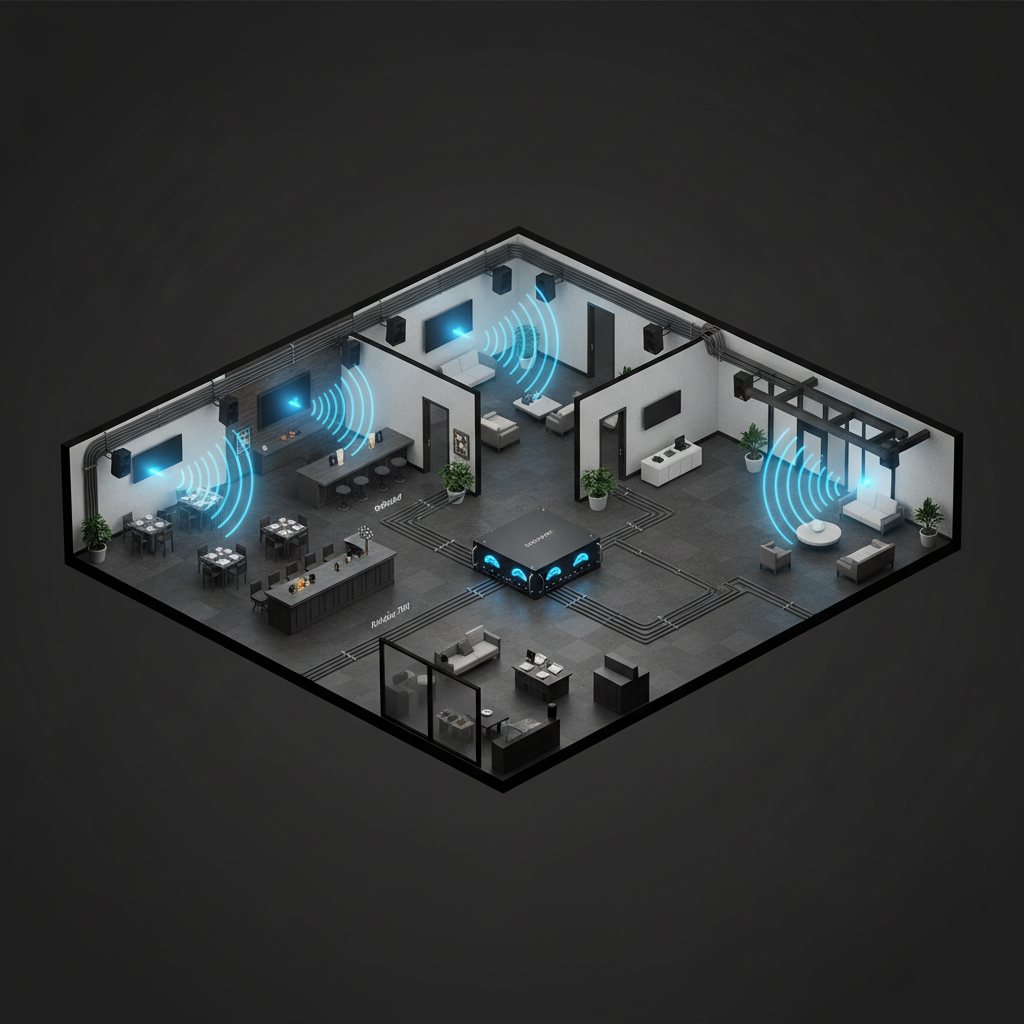
70V Speakers and Multi-Zone Amplifiers: Matching Music and Volume to Every Space
Learn how 70V distributed speakers and zone-capable amplifiers help each area of a business play the right music at the right level.
Commercial Audio Systems vs. a Bluetooth Speaker and a Personal Playlist
See why even coverage, reliable paging, simple controls, and properly licensed business music make a designed commercial sound system a better fit than a personal playlist.
Let's discuss your project.
Reach out today for a consultation and secure your business future.